
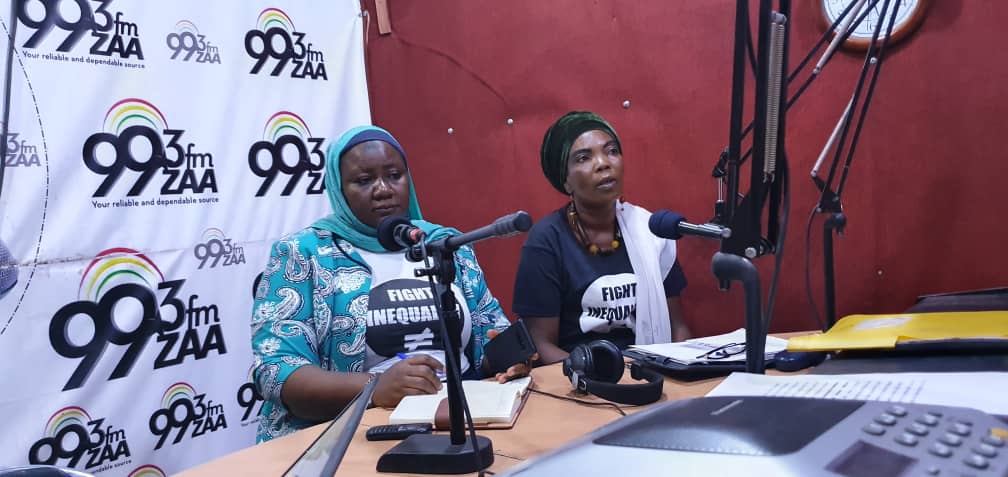
The Executive Director for SWIDA – Ghana, Hajia Alima Sagito – Saeed has called on governments to work at tackling the issues that negatively affect inequality, in order that progress can be made in the country’s fight against the menace, which is one of the drivers of slow human development.
Hajia Alimah was co – panelists with the Executive Director for Songtaba, Hajia Lamnatu Adam, on Tamale – based radio station, Zaa Radio, where they had discussions as part of activities to mark this year’s “Fight Inequality” Week, commemorated in the third week of January every year.
Each year in January, members of the Fight Inequality Alliance mobilize across the world to highlight the crisis of inequality, to demonstrate that people are organizing and demanding an end to the age of greed and putting forward their solutions for a more equal society.
According to the Fight Inequality Alliance, “knowing that people around the world are mobilizing for the same cause at the same time helps inspire and embolden people to organize and push for change”.
The week of action happens as the global 1% meet at the World Economic Forum on the exclusive Swiss mountain resort of Davos, as a counterpoint to elite discussions on inequality – a huge show of people power to demonstrate the real solutions will come from people on the frontlines of inequality around the world.
SWIDA – Ghana, which is an organization that has been pushing for equality over the years, has been involved in this mobilization for some time, mainly due to the gaps of inequality Ghana has, which affects its growth and development of the people.
According Oxfarm International’s website, “One of the richest men in Ghana earns more in a month than one of the poorest women could earn in 1,000 years”.
Oxfam also found in a survey it conducted that “Nearly a third of the poorest children in the Northern Region have never been to school, compared to just 5% of the wealthiest. Girls in particular are losing out on a chance of a better life, with the poorest girls from the most marginalized regions facing the greatest challenges”.
Hajia Alimah sagito expressed worry over the rising inequality especially in northern Ghana, which has been holding up poverty reduction, harming the environmental, hurting the economy, destabilizing society and undermining democracy.
She is therefore urging governments to make efforts at bridging the gaps of inequality, to allow for its people to develop more to contribute to development of the country.
 swidagh.org