
Available figures
This data reveals that in 2020, on a daily basis, out of nearly 301 pregnancies recorded in Ghana, 13 involved teenagers.
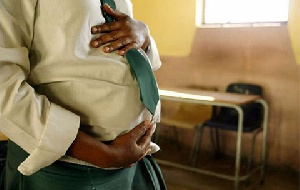
According to the GHS, Ghana recorded a total of 109,888 teen pregnancies with the lowest girls put in the family way being 10-year olds.
The World Bank collection of development indicators reported that in 2019, about 2,380,000 teenage mothers between the ages of 15 and 19 were found in Ghana.
Per the data, girls between the ages of 10 and 14 years account for 2,856 pregnancies recorded in 2020 while another 107,023 girls from ages 15 to 19 were impregnated within the same period.
Statistics from Reproductive Health Journal, Biomedcentral.com, indicates that in 2019, about 143 teenagers got pregnant and gave birth in northern Ghana with an increase to 3,780 in 2020.
The causes
Most of the pregnancies came because of the lock down instituted by the government as a preventive measure to stop the infection and spread of COVID – 19.
The causes of teenage pregnancies include, the loss of livelihoods by parents, poverty, parental neglect, sexual exploitation and abuse, defilement or rape, curiosity or adventurous behaviours, as well as the lack of adolescent and sexual reproductive health education in communities.
This comprised their education and other opportunities, which makes them vulnerable to poverty, violence, crime and social exclusion.
Executive Director for Savannah Women Integrated Development Agency (SWIDA – Gh), Hajia Alimah Sagito – Saeed, said COVID – 19 increased the school dropout situation particularly among the girls in communities across the country.
She added that mostly, girls in urban areas were forced to worked by trading in the streets or engaging in head porting (kayaye), just to increase their household income.
Scenarios
In an interview during “Mobilizing media to fight COVID – 19” being implemented by Journalists for Human Rights in collaboration with the Ghana Journalists Association, a 14 – year old student from Nanton Kurugu Senior High School in the Northern Region told the Ghana News Agency that she became pregnant as a result of the closure of schools during the COVID – 19 period.
She said after delivery, her parents forced into marriage to the detriment of her education, while her 38 – year old husband has been supportive economically, thereby compound her situation, which compelled her to resort to selling foodstuffs in the Nanton market to enable her cater for herself and her child.
Another 12 year old primary school girl from the Bimbila Primary in the northern region shared her experience, saying she became pregnant during the lockdown period.
According to her, her parents were facing financial challenges taking care of her and five siblings she has. In Diare, a 16 year old Final year student of the Diare JHS said she was forced to marry a 40 year old man due to poverty, adding that she now has a child from the marriage.
She said the early marriage has curtailed her dream of becoming a nurse, but she desires to go to school if she gets support.
E-Learning
The government introduced enhanced learning to help students stay academically active while at home, but challenges such as the lack of electricity, the lack of television of radio sets and internet in homes of some teenage girls, compromised the quality of the programme and thus exposed learning inequalities in the country’s education system.
Working to develop better laws
A number of international commitments on improving gender equality and ending poverty, made the attainment of quality education a key concern.
These are, the Convention for the Elimination of all forms of Violence Against Women (CEDAW) and the Sustainable Development Goals (SGDs), particularly goals 4 and 5.
Key among issues being advocated, included the right to education for all, reduction in levels of women’s literacy, bridging the gender gap in education, empowerment of women to look after their children and contribute to national development.
The northern regional coordinator of the Domestic Violence and Victim’s Support Unit, DSP Emmanuel Holortu in an interview with the Ghana News Agency, indicated that the menace of child marriage worsened due to economic challenges that confronted parents due to the COVID – 19 pandemic.
He stated that even though the legal age of marriage is 18 years, children more than 16 could consent to sex in Ghana.
He expressed concerns about gaps in the country’s laws on consent to sex by 16 years, saying “what has not been addressed, however, is if a child is sexually exploited and she becomes pregnant at 16 or 17, what happens to the perpetrator”?
DSP Holortu noted there was no provision for any form of sanction and the teenage girl must bare the brunt alone, adding that “this injustice is supported by the criminal offenses Act of 1960, which has entrenched violator’s impunity”.
He added that child rights advocates have engaged governments and development actors for a review of the child protection legislation such as the criminal offenses Act, the children’s Act and the Juvenile Justice Act to ensure uniformity and synchronization of the legal age of marriage to the legal age of consent, with a Romeo and Juliet clause.
Way Forward
Facilitating pregnant girls’ re – entry into school after delivery becomes one measure for reducing gender disparities in quality educational attainment.
Due to that, Ghana’s Education Ministry has developed guidelines that support teenagers with unplanned pregnancies to continue schooling or opt to return after delivery.
This guideline is in conformity with the government policy of compulsory universal basic education for every child in Ghana.
Executive Director for Songtaba, Hajia Lamnatu Adam, who was part of the stakeholder engagement, urged government and other stakeholders to speed up measures to protect children from abuse of violence and teenage pregnancy.
Conclusion
Parents should take the responsibility to control and enlighten their teenage girls on sex education.
Government and stakeholders, including human rights advocates, should push more to speed up amendments to laws that put girls at risk and in disadvantaged positions.
 swidagh.org