
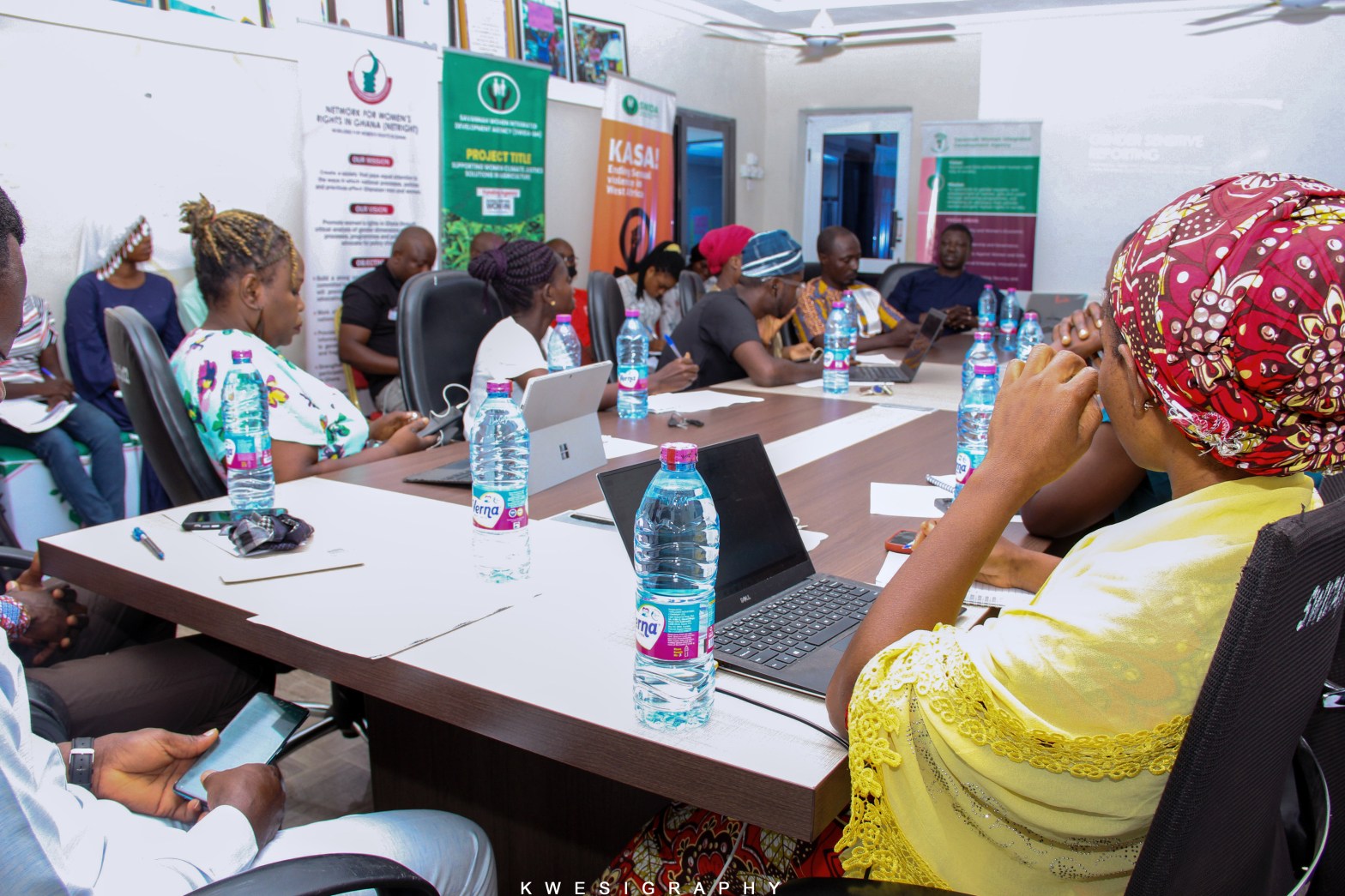
The Savannah Women Integrated Development Agency (SWIDA-Gh) has organized training for journalists in the northern region to support in capacity building on news reporting, taking into consideration, gender.
The training took place at the conference hall of SWIDA-Ghana and was focused on gender-sensitive reporting, linked to the ownership of land by women, as a way to ensuring food security in Ghana and the role of journalists in achieving this objective.
News reporters and editors across the northern region came together to learn and share experiences on what has been the bane of women’s growth, due to the newsroom’s placing less importance on the gender angles in its reporting and broadcasting, especially on the needs of the rural woman.

Main facilitator and Public Affairs Manager at the University for Development Studies (UDS), Abdul Hayi Moomen told journalists in a presentation, that the gender assigned roles and approaches in society are part of the reasons many women coil back and see themselves as not being capable, but sadly, some journalists have been part of this reality.
Mr. Moomen’s presentation indicated that media coverage not being made to reflect a “holistic and realistic view of all genders” is part of the media reporting approaches that contributes to hindering the growth or women especially.
Showing the way forward for what journalists must do to ensure their reportage covers all genders fairly Mr. Moomen said “gender-sensitive reporting should be considered a key principle of professional media production, similar to value of accuracy and balance. Gender must be considered at all levels of news production; from the editorial department where decisions are made about what stories to cover, to the field where stories are gathered”.

Executive Director for SWIDA-Gh, Hajia Alima Sagito-Saeed whose presentation was titled “The land Act – A progressive law on Gender Equality”, highlighted the gender and spousal provision in the Act and on progressive land ownership by women as a way of ensuring gender equality, as she shared a stack of the realities in many rural communities with women and land ownership for various livelihood purposes.
According to Hajia Alima in her presentation, “The gender and spousal provision refers to a legal provision that ensures equal rights and opportunities for both men and women in terms of land ownership and property rights”.
The main objectives of the gender and spousal provision include ensuring equal rights to land ownership, protecting women’s land rights, promoting economic empowerment and enhancing social and political participation.
Linking land ownership by women to food security, Hajia Alima said “ensuring equitable land rights for women is essential for enhancing food security and climate resilience, since women even with the current challenges of land ownership, produce much of the food Ghana consumes”.
Penalties
There are penalties as indicated by the Lands Commission of Ghana, for flouting the new land Act of 2020 (Act 1036). A land registrar is liable to 1 – 3 years imprisonment or a fine of 5,000 to 10,000 penalty units, for failure to register land in accordance with the Act’s provisions.
Hajia Alima ended her presentation by calling on journalists across the northern region and Ghana, to read the new land Act more, to better engage stakeholders and to educate the public about the need to give what is due women to them, not do them a favor.
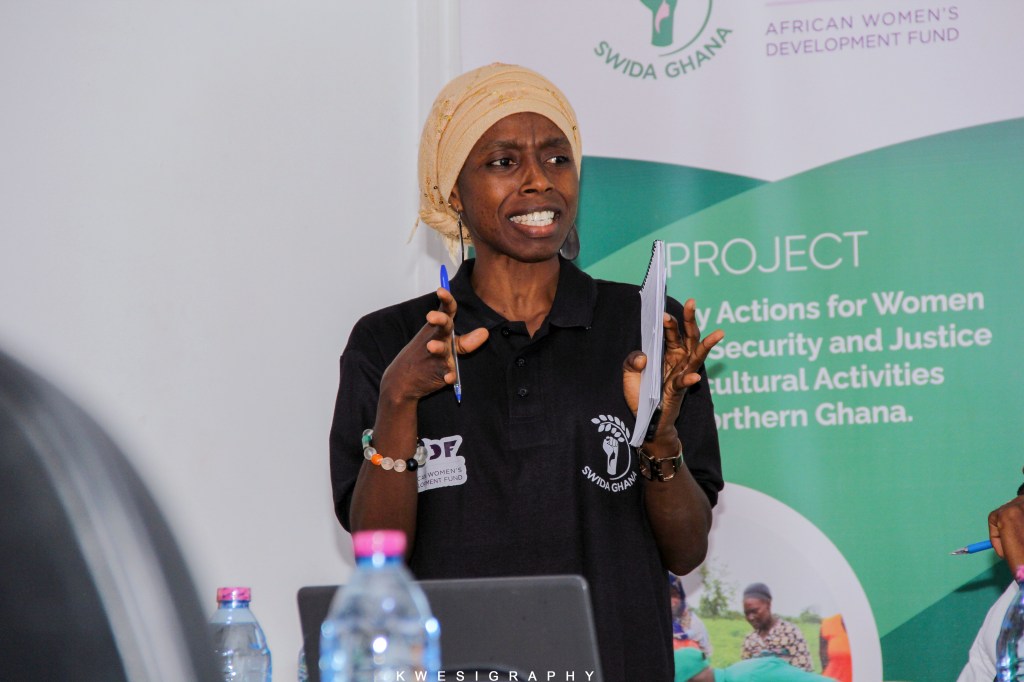
Gender and Communications officer for SWIDA-Gh, Khadijah Abdul-Samed entreated journalists to look beyond sensationalism in reporting on rural women, as from her experience working in the rural communities, the only voice the rural woman may have, is the media, aside NGOs.

As some of the journalists shared the realities of reporting and broadcasting when it comes to women as some of them being those limiting their capacities and shying away from the media, it was agreed by all that adequate production time and preparation should be considered when engaging women, since men have had the opportunity for a long time and can respond anytime they are called upon on the media.
 swidagh.org