
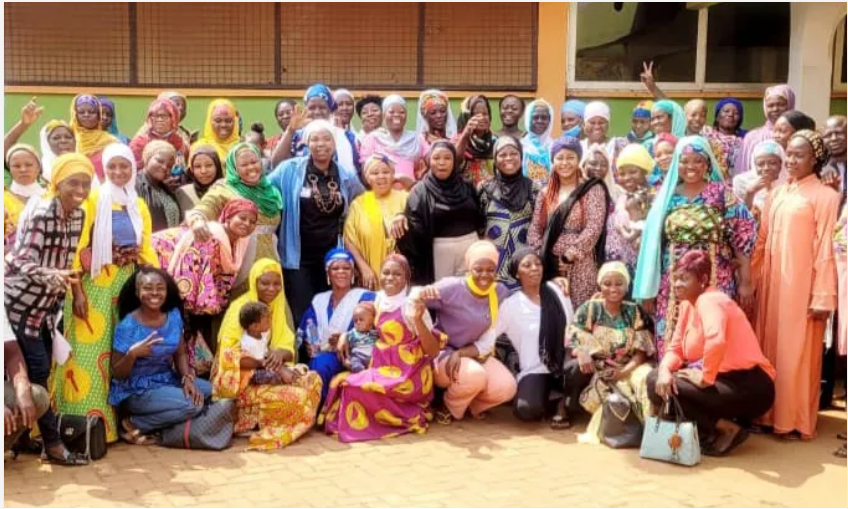
SWIDA-Ghana has held a workshop to empower women to understand unpaid care work and how efficient they can be at investing in their economic activities for income.
The workshop was also aimed at improving women’s skills in engagement with household and family members to support in the home, to reduce and redistribute care work to save time for other productive activities.
Organized by the Savannah Women Integrated Development Agency (SWIDA-Gh) in Tamale, the workshop had women participants introduced to the existing social protection initiatives and how they could take advantage of them, to reduce expenditure.
This was part of SWIDA-Gh’s Advocacy Actions for Women Economic Security and Justice in Agricultural Actions in Northern Ghana project, being implemented in the Northern Region with support from the Africa Women Development Fund.
The women participants were drawn from various economic areas including market women, shea butter processors and dressmakers from Kumbungu and Mion districts, Savelugu and Sagnarigu Municipalities and the Tamale Metropolis.
Executive Director for SWIDA-Gh, Hajia Alima Sagito-Saeed, speaking during the workshop, explained that while unpaid care work such as cooking, cleaning the home, taking care of children among other household chores had become mainly women’s responsibilities, some women used it as an excuse to not engage in a y business activities.
According to Hajia Alima, “We want women to see unpaid care work as something that they can transform to work for themselves. If you are very good at cleaning, you can do it elsewhere also to make income. So, even the unpaid care work, you can be efficient and do that one in your house but still save time to use that skill to get money”.
Officers from the Department of Social Welfare introduced Social Protection policies as important to women in businesses, because it enables them save money to invest in their businesses that would have been spent accessing essential services such as health.
Policies such as the NHIS, LEAP, FCUBE, and School Feeding programme, were some of the policies and interventions, they said, adding that women should do well to register for them depending on qualification from their social status.
The women were encouraged to make use of the interventions and not look down on their abilities to help them save money, which can be used to invest in businesses that can support them and their households.
 swidagh.org