SWIDA – Ghana’s Women Forum in Savannah Region Calls for Enabling Environment for Women Leaders to Excel

Women leaders in the Savannah Regional have been sharing some of the challenges confronting them as they manouvre the difficult routes of leadership in a system that identifies only the man to lead.

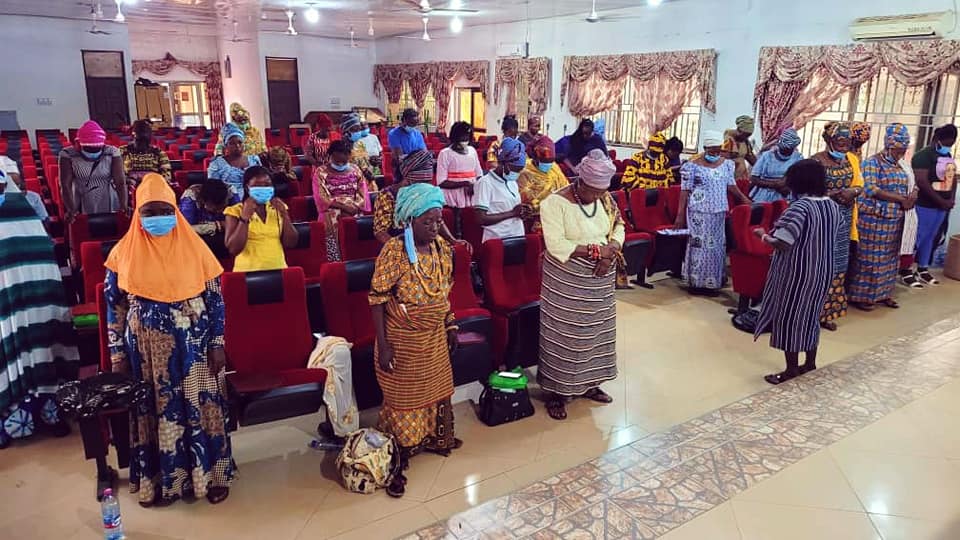
The Women Forum which was held at the Municipal Assembly Hall in Damongo, November, 2020, brought together 60 participants including Queen mothers and leaders of various women groups within the Savannah Region.

Municipal Chief Executive for West Gonja, Hon. Saeed Muhazu Jibreel Jegede who was present at the forum, showed gratitude to SWIDA – Ghana and partners for putting women at the centre of their programming.

The forum, hosted by SWIDA – Ghana on behalf of NETRIGHT – Gh and funded by the African Women Development Fund (AWDF), provided women leaders and young girls in the Savannah Region the needed platform to share the problems they face living and leading in Ghana’s stereotypical society.

Child Protection was at the centre of the discussion, which all stakeholders agreed needed attention to deal with.

Executive Director for SWIDA – Ghana, Hajia Alima Sagito – Saeed after giving a basic introduction of NETRIGHT to the participants, encouraged the women groups to join bigger coalitions so that their concerns can be highlighted beyond their immediate reach.

She called on them to not allow anything or anyone stand in their way when it comes to issues of their rights. She was however quick to add that rights always go with responsibilities, as such, they need to first let people understand why they are taking the decisions they take to avoid uncessary confrontations.

As part of the event package was a radio discussion on a local radio station in Damongo; PAD FM, where the team of organizers, led by SWIDA – Ghana marched to further raise the issues of concern to women leaders and girls in the region.

The team left Damongo with an increased appreciation of the work of Women Groups in the area, as well as an increased sense of responsibility towards the achievement of the Women Empowerment Agenda.
SWIDA – Ghana Leads COVID-19 Media Sensitization Project

The Savannah Women Integrated Development Agency (SWIDA – Ghana) will be spearheading the implementation of a three-month media sensitization project aimed at educating the public, particularly inhabitants of rural communities within the Northern Region.

This sensitization, will hinge on comprehensive information on COVID-19 to increase behavioral change towards the observance of the preventive protocols.

The project which is being funded by World Vision Ghana is in collaboration with the Ghana Education Service (GES), Department of Children, GhanaFact (a fact-checking organisation), Ghana Health Service (GHS), Pong Tamale Experimental School, Ghana Broadcasting Corporation (GBC-Tamale), Might FM (Savelugu) and Sagani TV.

The strategy of the project will include the use of radio and TV discussions featuring experienced resource persons to talk extensively on COVID-19 from different relevant perspectives.

The other strategy the project will employ, will be the use of Radio drama on the topics discussed by the Drama Club of the Pong Tamale Experimental School.

There will also be quizzes, to be organized for callers to win various PPE and branded T-shirts, after answering questions live on air, relating to the drama.

On welcoming the task to spearhead the project, the Executive Director for SWIDA-Ghana, Hajia Alima Sagito-Saeed stated that “the topics to be discussed will be strategically framed to contextually respond to the issues relating to COVID-19, particularly in the Northern Region”.

Some of the topics to be looked at include COVID-19 and child protection, COVID 19 and Child Early and Forced Marriages (CEFM), COVID-19 and farming COVID-19 nutrition and livelihoods, COVID-19 and misinformation among other topics.

The main expected outcome of the project in the end, is to contribute to global efforts aimed at improving prevention and response measures against COVID 19.

SWIDA – Ghana Calls for better Approaches to Tackling Inequality Issues in Ghana

The Executive Director for SWIDA – Ghana, Hajia Alima Sagito – Saeed has called on governments to work at tackling the issues that negatively affect inequality, in order that progress can be made in the country’s fight against the menace, which is one of the drivers of slow human development.

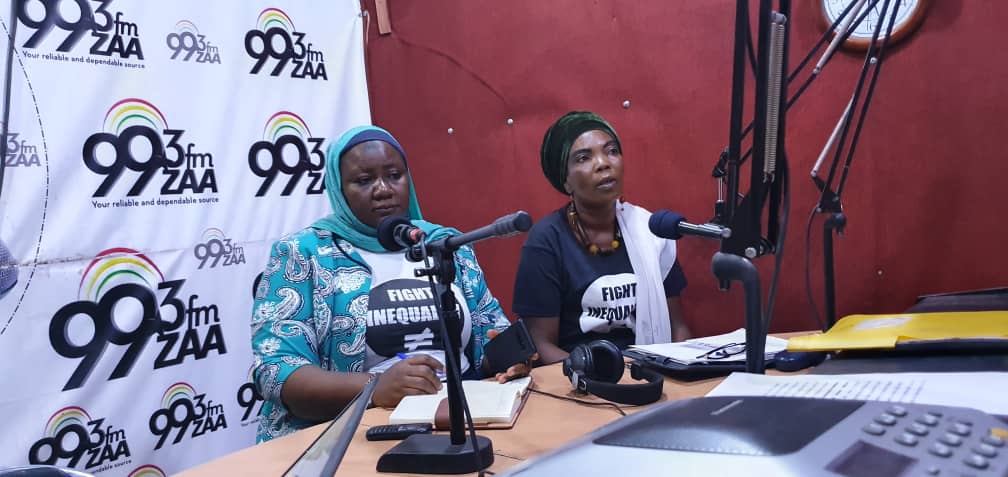
Hajia Alimah was co – panelists with the Executive Director for Songtaba, Hajia Lamnatu Adam, on Tamale – based radio station, Zaa Radio, where they had discussions as part of activities to mark this year’s “Fight Inequality” Week, commemorated in the third week of January every year.

Each year in January, members of the Fight Inequality Alliance mobilize across the world to highlight the crisis of inequality, to demonstrate that people are organizing and demanding an end to the age of greed and putting forward their solutions for a more equal society.

According to the Fight Inequality Alliance, “knowing that people around the world are mobilizing for the same cause at the same time helps inspire and embolden people to organize and push for change”.

The week of action happens as the global 1% meet at the World Economic Forum on the exclusive Swiss mountain resort of Davos, as a counterpoint to elite discussions on inequality – a huge show of people power to demonstrate the real solutions will come from people on the frontlines of inequality around the world.

SWIDA – Ghana, which is an organization that has been pushing for equality over the years, has been involved in this mobilization for some time, mainly due to the gaps of inequality Ghana has, which affects its growth and development of the people.

According Oxfarm International’s website, “One of the richest men in Ghana earns more in a month than one of the poorest women could earn in 1,000 years”.

Oxfam also found in a survey it conducted that “Nearly a third of the poorest children in the Northern Region have never been to school, compared to just 5% of the wealthiest. Girls in particular are losing out on a chance of a better life, with the poorest girls from the most marginalized regions facing the greatest challenges”.

Hajia Alimah sagito expressed worry over the rising inequality especially in northern Ghana, which has been holding up poverty reduction, harming the environmental, hurting the economy, destabilizing society and undermining democracy.

She is therefore urging governments to make efforts at bridging the gaps of inequality, to allow for its people to develop more to contribute to development of the country.